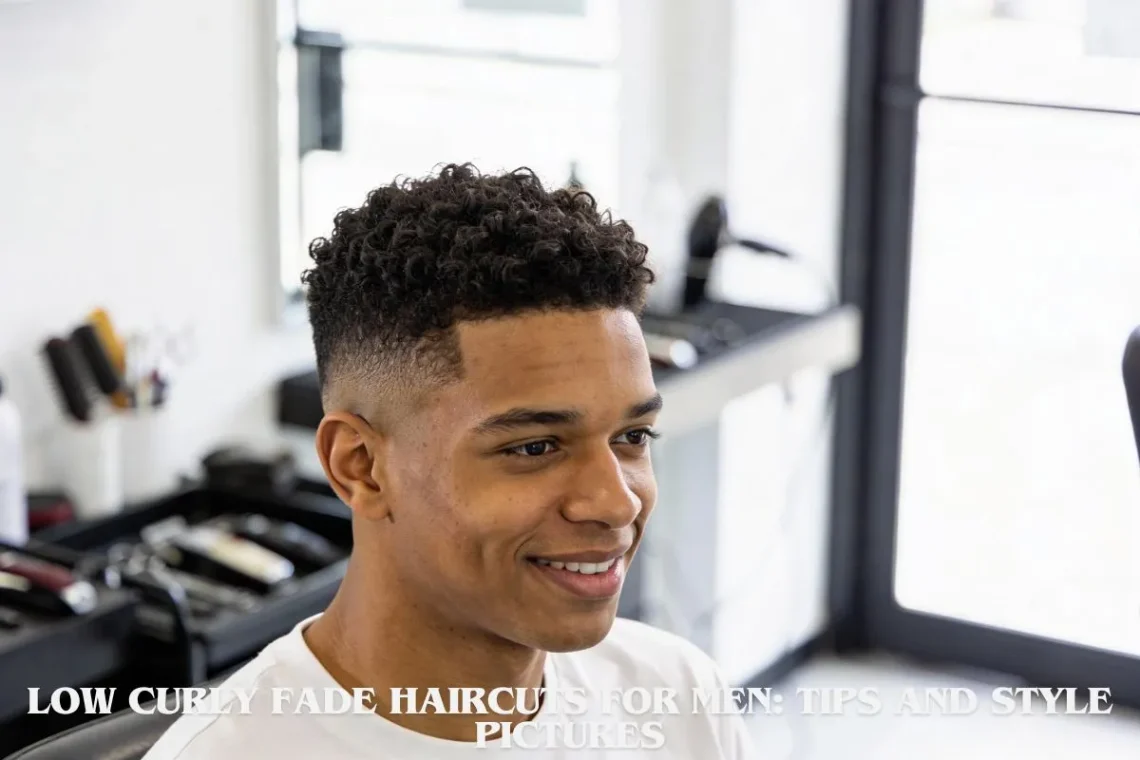
Low curly fade haircuts for men: Tips and style pictures
Low curly fade haircuts give curly hair a clean frame without killing the natural texture. They look modern, neat, and still relaxed enough for daily life. This guide walks through styles, maintenance, and real-world tips in simple, easy language.
What is a low curly fade haircut?
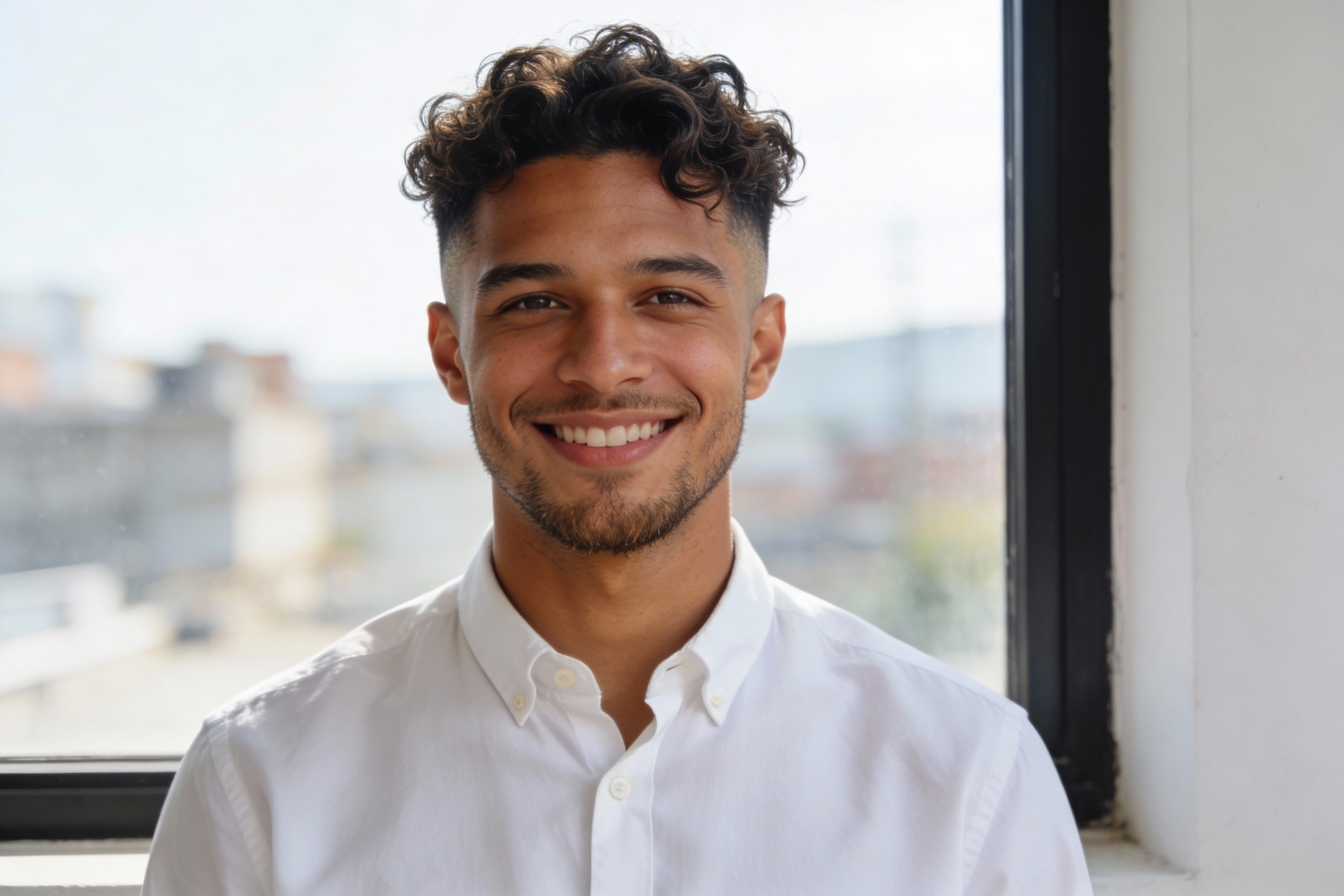
A low curly fade is a haircut where the hair gradually gets shorter as it goes down the sides and back, but the fade starts low near the ears and neckline. The curls on top stay longer, so they keep their natural shape.
In a low fade, the shortest part usually begins around the top of the ear, not high up near the temples. That makes it softer and more subtle than a high or mid fade. The result is a clean outline that still lets curls be the main focus.
When a friend first tried a low curly fade after years of all-over short cuts, he said it felt like “finally my curls are on display, but my neck and sides don’t look messy anymore.” That balance is exactly what makes this style work so well.
Why low fades work well for curly hair
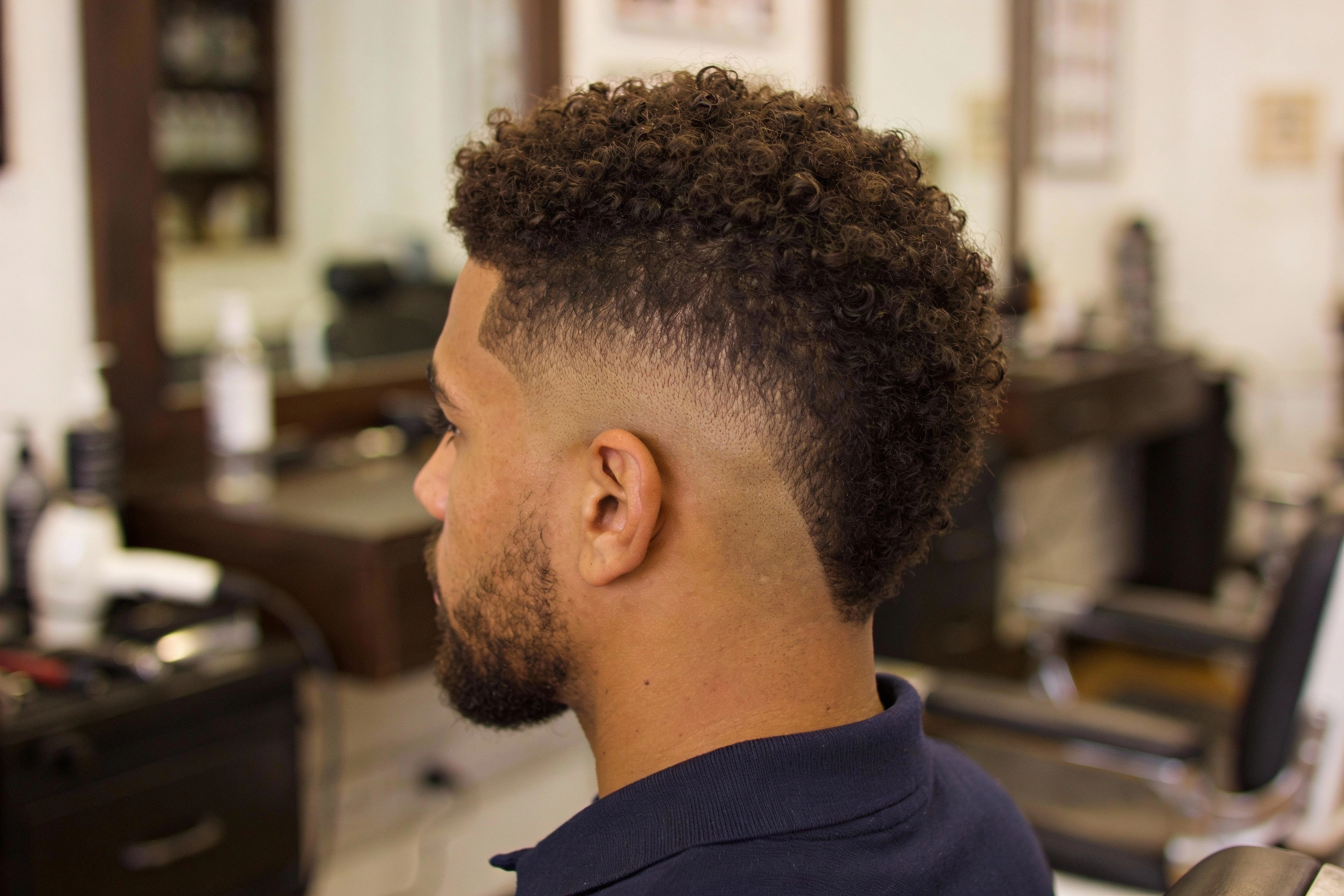
Curly hair often looks best when the shape is controlled but the texture is free. A low fade does both at the same time.
-
It removes bulk around the sides and neckline, so the haircut looks tidy instead of puffy.
-
It leaves enough length on top for curls to form properly instead of turning into frizz or tight spikes.
A low fade also creates a natural frame for the face. Because the fade starts lower, the transition from curls to skin or very short hair looks softer. On busy mornings, that means less styling stress. Even when curls are not perfectly defined, the clean sides keep the whole haircut looking intentional.
One barber once told me, “Curly hair is like a plant – you don’t need to chop it, you just need to shape the pot.” The low fade is that pot: it shapes everything without fighting the curls.
Popular low curly fade styles
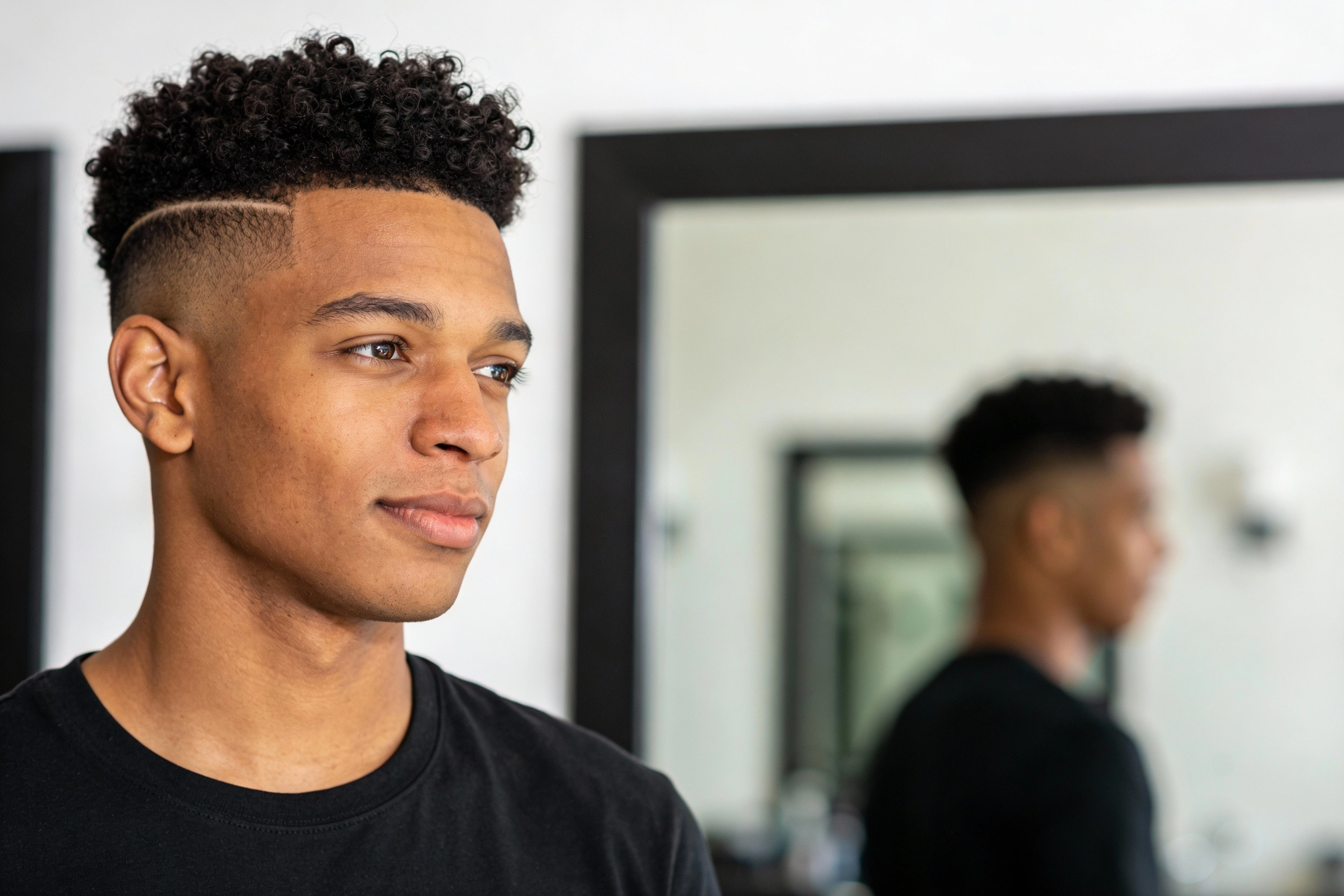
Below are style ideas you can show your barber or use as a guide when searching for pictures. Think of them as categories rather than strict rules.
Low fade with short curls
Here the curls on top stay short, usually between 1–2 cm in length.
-
Good if you like low-effort styling and don’t want hair in your eyes.
-
Works well for guys who are just starting to grow their curls and feel unsure about going too long.
Visually, this style looks sharp from every angle. The top has a light texture, while the sides blend down nicely. From a distance, it looks almost like a modern crew cut, but with softer edges.
Low taper fade with textured curls
A taper fade focuses on gradually reducing length at the very edges: sideburns, around the ears, and the neckline. The rest of the sides are short, but not skin-close.
-
Great if you want a business-friendly look that still feels relaxed.
-
The curls on top can be medium length and more textured.
This style is ideal for people who want to move between formal and casual settings easily. With a shirt and blazer, it looks neat. With a T-shirt, it still looks stylish and not too strict.
Low skin fade with curly top
In a low skin fade, the shortest part of the fade goes right down to the skin around the very bottom.
-
Gives a sharper contrast between the bare sides and the curly top.
-
Works best if you like a bold outline and sharper edges.
This can look especially striking on tighter curls. The defined sides make the curls sit like a soft, rounded shape on top, almost like a modern, grown-up take on a high-top fade, but lower and more wearable day to day.
Low burst fade for curls
A burst fade curves around the ear, creating a “burst” of faded hair that fans out behind it, while the back can be left fuller or shaped.
-
Good if you want something trendier and a little more eye-catching.
-
Often paired with a slight mullet or longer curls at the back.
From the side, this haircut has a lot of character. It suits people who are into fashion-forward looks and don’t mind standing out a bit more.
Low drop fade with natural curls
A drop fade dips lower at the back of the head, following the natural curve of the skull.
-
Works well with natural curl patterns because it respects the head shape.
-
Looks especially good if you want a rounded curly top from all angles.
This style is a great choice for someone who wants a smooth, almost sculpted look without feeling too harsh. From the back, the fade follows the curve of the occipital bone, which looks neat but organic.
Best face shapes for low curly fades
Low curly fades can suit almost every face shape, but they highlight different features depending on the shape.
-
Round faces: A bit more height in the curls on top can make the face look longer, while low, tight sides keep things defined.
-
Oval faces: This face shape can wear almost any version. You can go shorter or longer on top without losing balance.
-
Square faces: Softer curls on top and a smooth low fade help soften strong jawlines while still looking masculine.
One barber mentioned that when a client has a round face and very dense curls, he keeps the fade low and gentle but shapes the top into a subtle oval. The client later said he finally liked his photos from the side, which he had always avoided before. That is the power of pairing the right fade with the right face shape.
How to style a low curly fade at home
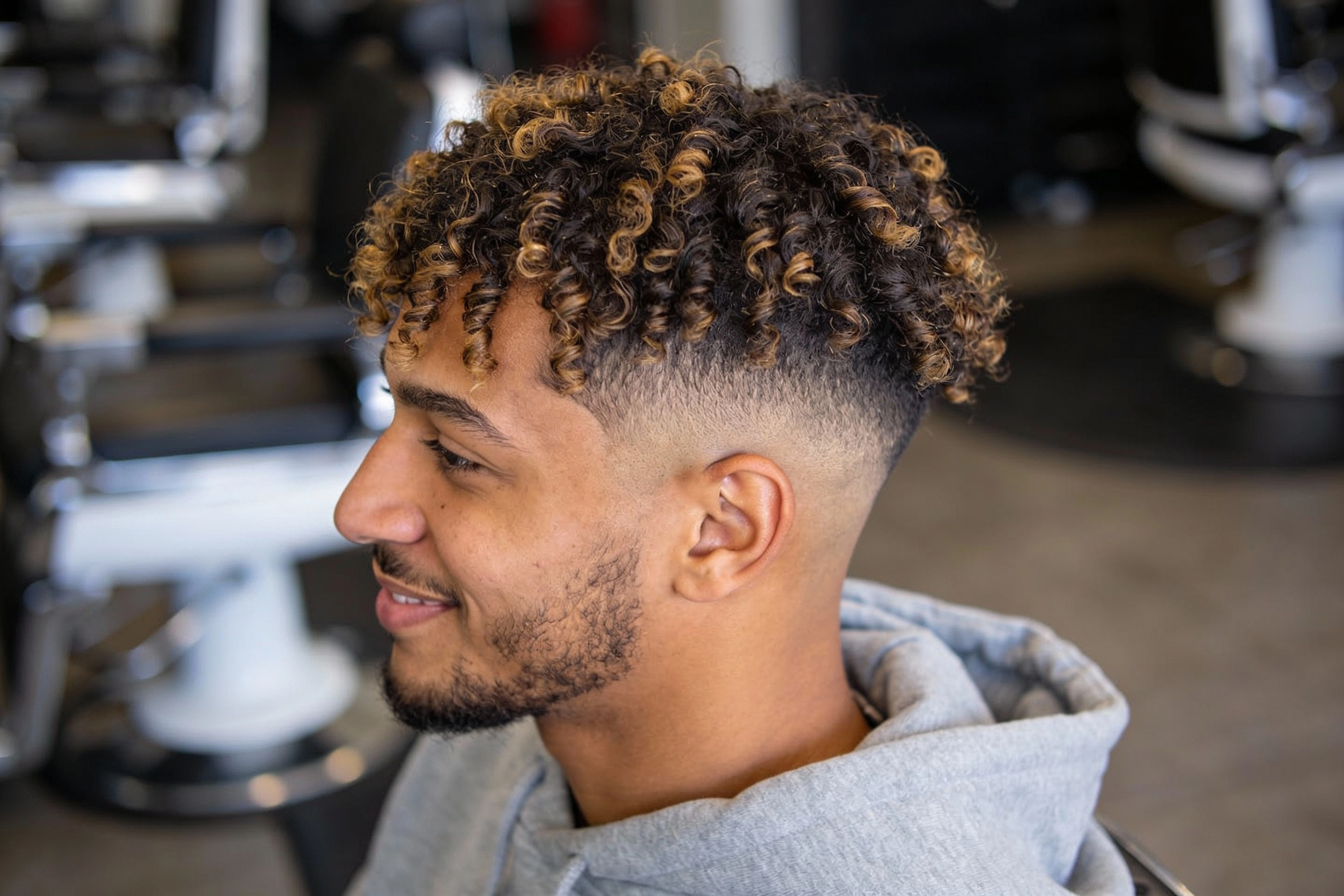
You do not need a bathroom full of products to style a low curly fade. A simple, repeatable routine works best.
-
Wash or rinse
-
Use a gentle shampoo 2–3 times a week, not every day, to avoid drying out curls.
-
On other days, just rinse with lukewarm water and apply a light conditioner.
-
-
Add moisture
-
On damp hair, apply a leave-in conditioner or light curl cream.
-
Focus on the top and upper sides where curls are longer.
-
-
Define curls
-
Scrunch your hair gently upward with your hands.
-
If using a diffuser, keep heat low and airflow gentle. Move the diffuser around instead of holding it in one spot.
-
-
Set and finish
-
If needed, add a small amount of light-hold gel or mousse for extra hold.
-
Avoid touching your hair while it dries to prevent frizz.
-
Over time, you will learn how your own curls react. One person may need only a pea-sized amount of product, while another needs more. The key is to start small and adjust.
Products that make curly fades look better
The right products help keep curls soft, defined, and healthy. The wrong ones leave hair dry, crunchy, or dull.
Helpful product types:
-
Sulfate-free shampoo: Kinder to curls and scalp.
-
Moisturising conditioner: Keeps curls hydrated and easier to manage.
-
Leave-in conditioner or curl cream: Adds slip and softness.
-
Light gel or mousse: Gives hold without heavy crunch.
Things to avoid or limit:
-
Strong alcohol-heavy sprays that dry out curls.
-
Heavy waxes or thick pomades that weigh curls down and block definition.
A simple rule: if the product feels sticky and heavy on your hands, it will likely feel heavy on your curls too. A barber once demoed this by putting a small amount of product on the back of a client’s hand and saying, “If your skin feels like it can’t breathe, your hair won’t either.”
Low curly fades for different curl types
Not all curls behave the same way. The same haircut can look very different on loose waves and tight coils.
-
Loose waves (2A–2C): A low fade plus slightly longer length on top gives a relaxed, beachy look. Curl cream plus a small amount of salt spray can add gentle texture.
-
Medium curls (3A–3B): These curls form defined ringlets. A low drop or low taper fade with medium length on top can create a soft, round shape. A light gel can help each ringlet stay in place.
-
Tight curls/coils (3C–4A): Here, shape is everything. A low skin fade or low burst fade with a compact curly top can look powerful and intentional. Thicker creams and butters (used sparingly) often work better than very light mousses.
If you are not sure about your curl type, look at your hair when it is clean, wet, and product-free. Then, as it dries, watch how it shrinks and forms. That shrinkage tells you a lot about how short you should really cut the top.
Barber tips: what to ask for
Walking into a barbershop without the right words can be stressful, especially with curly hair. Clear communication helps a lot.
Useful things to say:
-
“I’d like a low fade with curls left longer on top.”
-
“Please keep the fade low around the ears and neckline, not too high.”
-
“I want to keep my curls looking natural, not too short on top.”
Helpful steps before and during your visit:
-
Bring 2–3 photos of low curly fades you like. Point out what you like in each picture (top length, tightness of fade, line-up, etc.).
-
Tell your barber how you normally style your hair and how much time you are willing to spend daily.
-
Ask them what they recommend for your specific curl pattern and head shape.
Many barbers appreciate honest feedback. One client told his barber, “Last time the fade went a bit too high for my taste.” The barber adjusted, and the next cut was much closer to what he wanted. Saying this politely builds a better long-term relationship.
How often to maintain a low curly fade
Curly hair grows in all directions, so keeping the fade fresh is more about the sides and neckline than the top.
Rough guide:
-
Fade clean-up: Every 2–3 weeks to keep the sides and back sharp.
-
Full haircut (including shaping the top): Every 4–6 weeks, depending on how fast your hair grows and how tight your curls are.
Some people learn to clean up the neckline at home with a small trimmer between barber visits. If you try that, go slowly and stick to the natural hairline. A crooked line at the back is hard to hide.
Common styling mistakes with low curly fades
A few small mistakes can make a good haircut look less polished than it really is.
-
Over-drying: Using high heat and strong airflow roughens curls, causing frizz and dullness.
-
Brushing dry curls: This breaks up curl clumps and leads to a puffed-out shape. Use your fingers or a wide-tooth comb on wet or damp hair instead.
-
Skipping moisture: Curly hair is naturally drier than straight hair. Without enough moisture, it loses shine and bounce.
-
Cutting the fade too high: If the fade creeps up too far, there is not enough length left for curls to form nicely. The haircut can look more like a high-and-tight than a curly style.
A friend once brushed his dry curls before a party because he wanted them “neat.” Ten minutes later, his hair had doubled in size and lost all curl definition. After that, he stuck to finger-detangling while the hair was still damp and noticed a huge difference.
Is a low fade good for curly hair?
Yes, a low fade is often one of the best options for curly hair because it respects both shape and texture. It removes bulk around the sides and neck, which can make curls look heavy or messy, while keeping enough length on top for the curls to form naturally.
For someone who wants a clean look for work but does not want to give up their curls, a low fade is a comfortable middle ground. It is less aggressive than a high fade and tends to grow out more gracefully, which helps if you cannot get to the barber as often.
How do you style a low fade with curls?
Styling a low fade with curls is less about perfection and more about a simple routine you can repeat daily.
-
Start with damp hair after a shower or a quick rinse.
-
Apply a small amount of leave-in conditioner through the top section, then scrunch.
-
Add curl cream or light gel if you want more hold.
-
Let it air dry or use a diffuser on low heat.
For busy mornings, one trick is to sleep on a satin pillowcase or use a satin bonnet. That reduces friction, so in the morning you often only need a bit of water and a tiny amount of product to bring the curls back to life.
What are the 7 basic haircuts?
Barbers often talk about classic base shapes that many modern styles build from. People may list them slightly differently, but a simple way to think of “basic” haircuts includes:
-
Buzz cut
-
Crew cut
-
Caesar cut
-
Side part
-
Pompadour
-
Quiff
-
Fade (low, mid, or high)
A low curly fade usually combines elements of a fade with a textured top. In other words, it is not a completely separate universe. It is a modern twist that borrows from these basic shapes and adapts them to curly hair.
What is a 3‑2‑1 haircut?
A “3‑2‑1” haircut usually refers to the clipper guard numbers used on different parts of the head.
-
Number 3 (longest) on top.
-
Number 2 on the upper sides.
-
Number 1 on the lower sides or neckline area.
It creates a simple gradient without complicated scissor work. On curly hair, a pure 3‑2‑1 can sometimes look more like a short, practical cut than a true “curly fade,” because the blend between lengths is more step-like than a smooth fade. However, some barbers will start with a 3‑2‑1 as a base and then refine it with extra blending, especially if the client wants an easy-to-maintain, low-fuss style.
If you like the idea of a 3‑2‑1 but also want a modern low curly fade, you can say something like, “Can we do something close to a 3‑2‑1, but with a smoother low fade on the sides and more definition in the curls on top?” That gives the barber a clear starting point and a clear direction.

You May Also Like
Top Low Taper Haircut Styles 2025 with Photo Inspirations
The Fluffy Edgar Haircut: Styling and Shape